What Dermatologists Really Mean by “Barrier Repair”
Skin care trends often highlight serums and creams that promise instant results, but dermatologists consistently emphasize barrier repair. Unlike treatments that immediately smooth wrinkles or brighten skin, barrier repair is foundational. It ensures the skin functions properly, protects against irritants, and locks in moisture.
Dr. Whitney Hovenic, dermatologist and Mohs surgeon, explains, “Your barrier — skin’s outermost layer — is your first line of defense.” This layer shields skin from bacteria, pollution, and environmental stressors while preventing transepidermal water loss, a leading cause of dryness, tightness, and irritation.
How the Skin Barrier Works
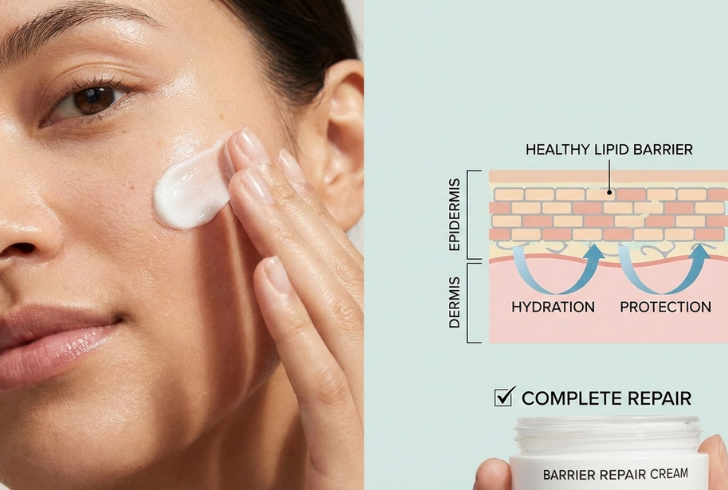
Gemini AI | The skin barrier works like a brick wall, barrier repair restores lost lipids and helps skin hold moisture while blocking harmful irritants.
Dermatologists often describe the barrier as a brick-and-mortar structure. The “bricks” are the skin cells forming the stratum corneum, the outermost skin layer. The “mortar” consists of lipids such as ceramides, cholesterol, and fatty acids, which hold cells together.
Dr. Jenna Queller emphasizes, “The mortar is what you’re trying to support when we talk about barrier repair.” A strong barrier keeps moisture and nutrients in the skin while blocking harmful substances from entering.
Factors That Weaken the Skin Barrier
Several habits and environmental factors can damage the barrier:
1. Frequent hot showers and overuse of hand sanitizers.
2. Harsh ingredients in skin care, like strong surfactants, acids, alcohols, and fragrances.
3. Over-exfoliation or skipping moisturizer after washing.
4. Seasonal changes, especially cold and dry weather, increase water loss.
5. Sun exposure, which breaks down collagen, depletes lipids, and generates free radicals.
These factors strip away protective lipids, leaving the skin dry, tight, and prone to irritation.
Why Most Moisturizers Don’t Repair the Barrier
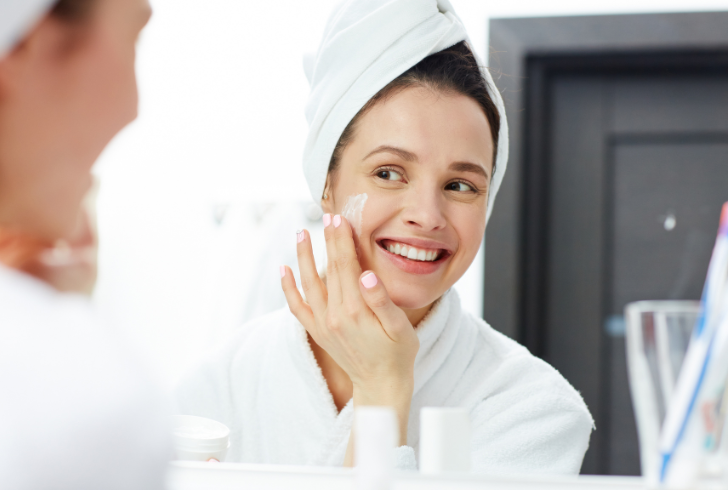
Freepik | Barrier-repair formulas offer instant hydration and lasting defense by fortifying the skin’s natural protective shield.
A thick moisturizer alone cannot restore the skin barrier. Effective barrier repair requires a balanced combination of lipids that the skin naturally needs. Ceramides mimic the skin’s mortar, while cholesterol and fatty acids replenish essential lipids.
Dr. Queller emphasizes that a 3:1:1 ratio of ceramides, cholesterol, and fatty acids most closely mirrors the skin’s natural composition. While not all products list precise ratios, formulations containing all three lipids—often marketed as “skin-identical lipids” or “barrier repair”—tend to perform best.
Humectants like hyaluronic acid or glycerin draw moisture into the skin, while occlusives such as shea butter, squalane, or petrolatum lock it in. “An occlusive by itself usually isn’t enough,” Dr. Queller says. “Moisture must be replenished first.”
Do Barrier-Repair Products Work?
Dr. Hovenic points out that these products provide immediate support by fortifying the skin’s barrier and locking in hydration. Over time, consistent application restores essential lipids and improves barrier structure.
Protecting your barrier also means minimizing damaging behaviors and applying daily sunscreen. When used correctly, barrier-repair products help the skin stay strong, hydrated, and resilient, offering more than a temporary fix.