Why Sleep Wins Over Exercise When It Comes to Health
Balancing sleep and exercise often feels like a trade-off, especially with packed schedules. New research suggests that when a choice has to be made, sleep deserves priority. The findings convey a clear message: without sufficient rest, staying active becomes more challenging, and long-term health can be compromised.
Recent evidence reinforces that sleep plays a role just as meaningful as physical activity in shaping overall health. Both work together across a 24-hour day, influencing energy levels, disease risk, and healthy aging.
Sleep and Movement Are Closely Linked
Health research continues to show that sleep and physical activity affect one another throughout the day. A large multinational study published in Communications Medicine reported that only 12.9% of participants managed to meet both key health targets at the same time:
At least 8,000 steps per day
7–9 hours of sleep each night
This gap shows how difficult it can be to align public health guidelines with daily life. The data also revealed something important: sleep duration had a noticeable effect on how active people were the next day, while step count barely changed sleep quality or length.
Josh Fitton, a doctoral researcher at Flinders University in Australia and lead author of the study, explained this imbalance clearly. He told Medical News Today:
“We demonstrate in our large multinational sample that only a small fraction of people are able to attain sufficient sleep and adequate physical activity on a routine basis. In light of this, we stress the importance of considering the real-world compatibility of prominent public health guidelines related to sleep and physical activity.”
Why Sleep Holds Equal Weight With Exercise
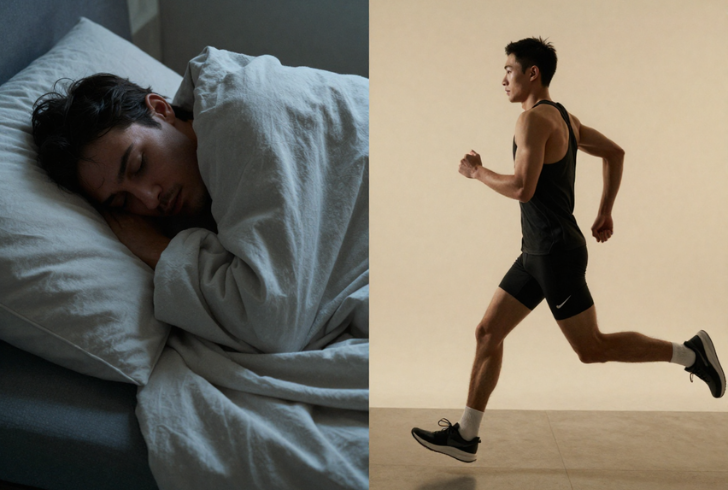
Freepik AI | Research shows few people meet both sleep and exercise targets simultaneously.
Both sleep and physical activity play a crucial role in supporting mental and physical health. When either one falls short, health risks rise. Research links insufficient sleep and low activity levels to higher chances of depression, obesity, type 2 diabetes, heart disease, chronic inflammation, and earlier death.
Sleep loss often leads to fatigue and hormonal shifts, which can reduce motivation to move the next day. At the same time, consistent physical activity typically supports better sleep quality—the balance between sleeping, sitting, and moving throughout the day shapes long-term health outcomes.
Studies also show that people who sleep too little and move too little face a higher risk of death. Because of this, researchers emphasize assessing both behaviors together rather than in isolation.
Daily Steps and Sleep Guidelines Explained
Step counts remain a revealing but straightforward metric. Higher daily physical activity is associated with a lower risk of chronic disease and a longer lifespan.
Research suggests that hitting approximately 8,000 steps per day offers strong cardiovascular and mortality benefits. For adults over 60, the optimal range appears closer to 6,000 steps, with diminishing returns beyond that level.
Sleep recommendations continue to align across health organizations:
- Adults 18–64: 7–9 hours
- Adults 65+: 7–8 hours
Earlier studies examining sleep and physical activity often relied on self-reporting or narrow datasets. This research distinguishes itself through objective tracking and long-term observation.
How Sleep Affects the Next Day’s Activity
The study followed 70,963 individuals from 244 regions over a period of 3.5 years. Sleep was monitored with under-mattress sensors, while fitness trackers captured daily step counts.
Findings included:
- Only 12.9% achieved both adequate sleep and 8,000 steps
- 16.5% averaged less than 7 hours of sleep and fewer than 5,000 steps
- Nearly two-thirds missed both sleep and activity benchmarks
Sleep followed an inverted U-shaped curve. Nights shorter than 6 hours or longer than 9 hours were followed by fewer steps, while peak activity followed about 6–7 hours of sleep.
A longer time needed to fall asleep was tied to lower activity the next day. On the other hand, better sleep efficiency—more time asleep while in bed—was linked to higher step counts.
Daily steps showed only a small effect on sleep measures. More steps slightly reduced the time needed to fall asleep and slightly improved sleep efficiency, but the changes were modest.
Sleep and Exercise Work Best Together
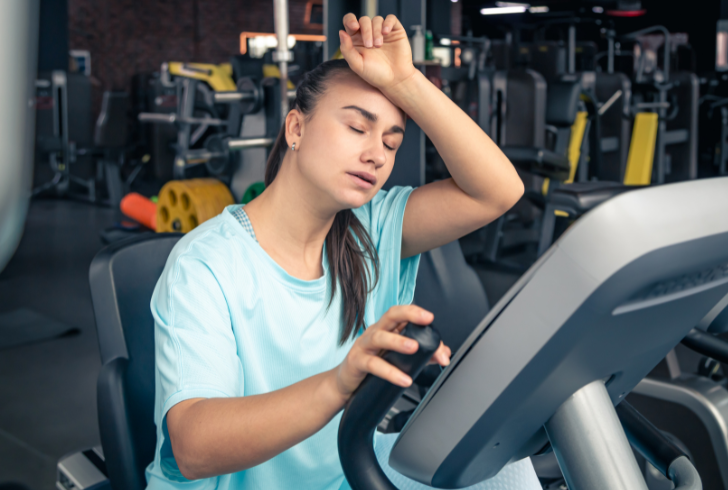
Freepik | Sacrificing sleep for workouts backfires by reducing energy and killing consistency.
While this study found limited influence of step count on sleep quality, other research suggests that moderate-to-vigorous physical activity can improve sleep. The difference may come from how the activity was measured.
Fitton noted that step tracking does not capture every type of movement. Activities such as swimming, cycling, or strength training were not fully represented. The study also could not assess workout intensity or timing, which may affect sleep patterns.
He also pointed out that participants were users of consumer health devices, meaning they likely represented more health-conscious or higher-income groups rather than the global population.
Despite these limits, the findings underline a shared conclusion: sleep and physical activity should be addressed together. Public health strategies that focus on only one aspect may miss the bigger picture.
Why Sleep Deserves Priority in Daily Planning
When schedules feel tight, sleep often gets reduced to make room for workouts or productivity. This research suggests that such trade-offs may have unintended consequences. Poor sleep reduces energy, lowers activity levels, and weakens consistency.
Improving sleep may be one of the simplest ways to support physical activity without adding more demands to the day. Rest sets the foundation for movement, focus, and long-term health.
Choosing sleep over exercise on busy days does not mean ignoring physical activity. Instead, it reflects an understanding of how the body works over a whole day. Adequate sleep supports energy, motivation, and the ability to stay active over time.
Research continues to show that healthy aging depends on meeting both sleep and movement needs, with sleep often acting as the starting point that makes everything else possible.