Why Cancer-Linked Dyes Are Found in Chinese Skincare Products
China’s beauty market has been rocked by a new report revealing banned dye contamination in several well-known skincare brands. The findings have triggered outrage and renewed calls for stronger cosmetic regulation.
Consumer testing organization Laoba Pingce — or DaddyLab, as it’s known abroad — published its results in a Sunday video, claiming it found the carcinogenic dye Sudan Red in several household-name skincare brands. Though outlawed in both food and cosmetics for over twenty years, the dye appeared in measurable amounts ranging from 400 to 2,000 micrograms per kilogram.
The revelation comes just before China’s Double 11 shopping festival, amplifying consumer anxiety at a time when beauty sales typically surge.
Health Risks and Sources of Contamination
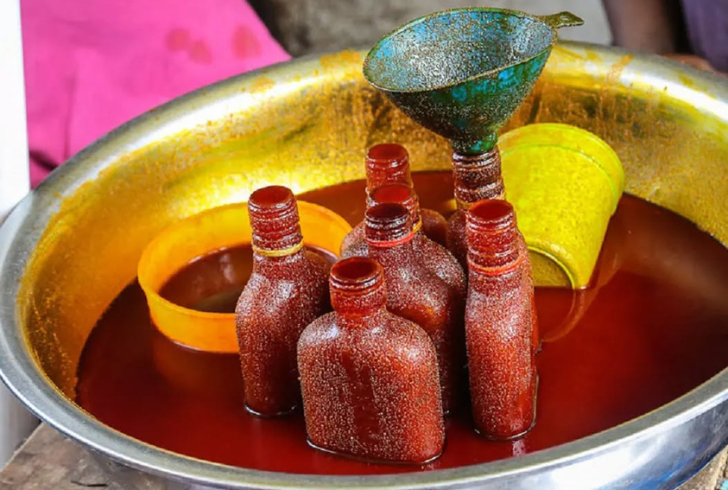
Instagram | @fdaghana_ | Consumers question product safety after banned dye found in popular skincare brands.
Once common in industrial materials like plastics and wax, Sudan Red was banned worldwide after being linked to cancer and genetic toxicity. Specialists believe the contamination likely stemmed from natural pigment suppliers whose raw materials were compromised during processing.
While these pigments are marketed as “natural,” they often degrade when exposed to light or changes in acidity. To stabilize color, some suppliers may secretly add synthetic dyes like Sudan Red.
Dermatologist Bing Han from Shanghai’s Tongji University explained that “unstable natural colorants sometimes push suppliers to blend in artificial ones to improve performance.”
Testing Gaps Exposed
Laoba Pingce pointed out that most cosmetic companies do not routinely test for Sudan Red since it isn’t part of standard safety screenings. Typical tests focus on heavy metals and microbes, not banned dyes.
Industry experts agree this oversight shows a serious gap in cosmetic regulation. A formulation scientist told local media that “a single raw-material mix can include thousands of compounds. Without suspicion of contamination, certain chemicals may go unnoticed.”
The expert compared this issue to the melamine milk scandal, where hidden toxic additives slipped through safety checks for years.
Public Reaction and Brand Responses
The report quickly went viral, drawing over 10 million views on Chinese social media within days. Consumers demanded tighter ingredient monitoring and greater supply chain transparency.
Several of the skincare products named in the report are still available for sale online. Some companies defended their safety, noting that their products had passed official checks by China’s National Medical Products Administration. Others said they had voluntarily sent the affected batches for independent retesting to reassure customers.
Experts pointed out that the detected levels of Sudan Red were relatively low and unlikely to cause harm with limited use. Still, the public remains uneasy — a sentiment shaped by China’s long history of safety scandals in food, pharmaceuticals, and cosmetics.
The Natural Ingredient Dilemma
Freepik | EyeEm | Experts call for stronger testing rules to keep harmful chemicals out of cosmetics.
The findings also revived an ongoing debate about the industry’s fixation on “natural” beauty products. Formulators say that pressure to replace synthetic additives with plant-based colorants has, at times, pushed suppliers toward less reliable or poorly tested materials.
One formulation expert cautioned that, “Brands should stop chasing the word ‘natural’ as a marketing badge. Artificial ingredients aren’t inherently bad — but unverified ‘natural’ ones can be.”
They stressed that the future of beauty must hinge on responsible sourcing and evidence-based standards, not trend-driven claims.
Regulatory Change and Future Testing
The case has placed new pressure on Chinese regulators to update testing frameworks and strengthen safety enforcement. Industry watchers believe clearer ingredient rules and tighter quality checks will be vital to restoring consumer confidence.
Analysts recommend broadening the list of banned substances screened in regular tests and investing in newer detection methods. “Even if Sudan Red is gone,” one warned, “another unsafe additive could slip in. Testing innovation must stay ahead of the problem.”
In the long run, the controversy could push the industry toward healthier growth — one built on transparency, rigorous science, and renewed public trust.